
TL;DR
Financial institutions are no longer short of AI ideas. The harder question is which use cases are worth scaling, and what needs to be in place before they do.
Insights from the session point to a clear sequence: start with the business problem, prepare the data and metadata around it, and apply governance according to the risk.
Participants highlighted different constraints, from data quality and security to infrastructure, regulation, people and proving measurable business value.
Before expanding an AI use case, institutions need evidence of its business value.
AI pilots are becoming easier to start. Scaling them is still much harder.
Across 43 selected Southeast Asian banking groups identified by AIBP, 40 reported AI in current use in 2025, up from 22 in 2022. Yet only eight reported realised financial outcomes from those efforts.
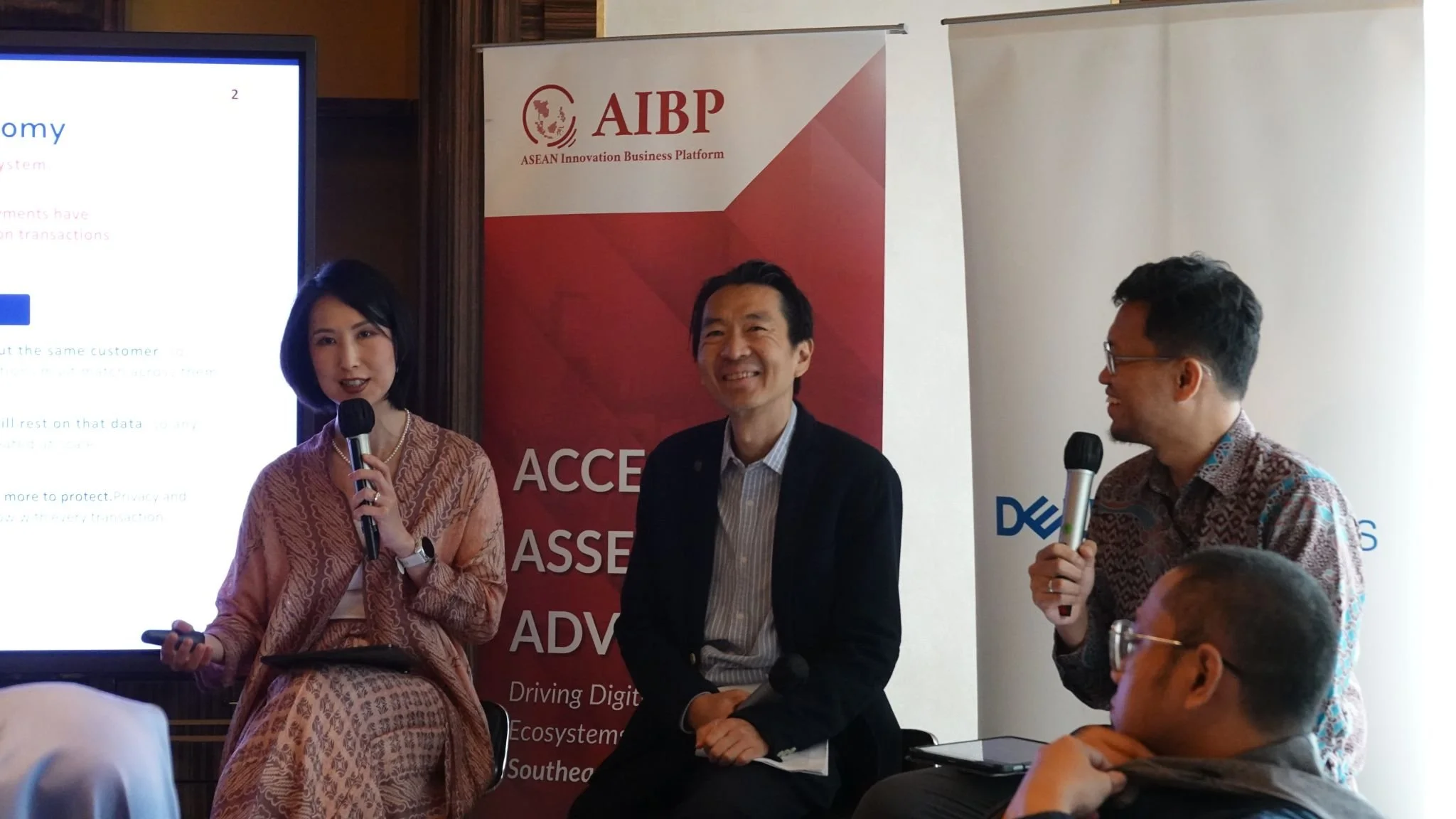
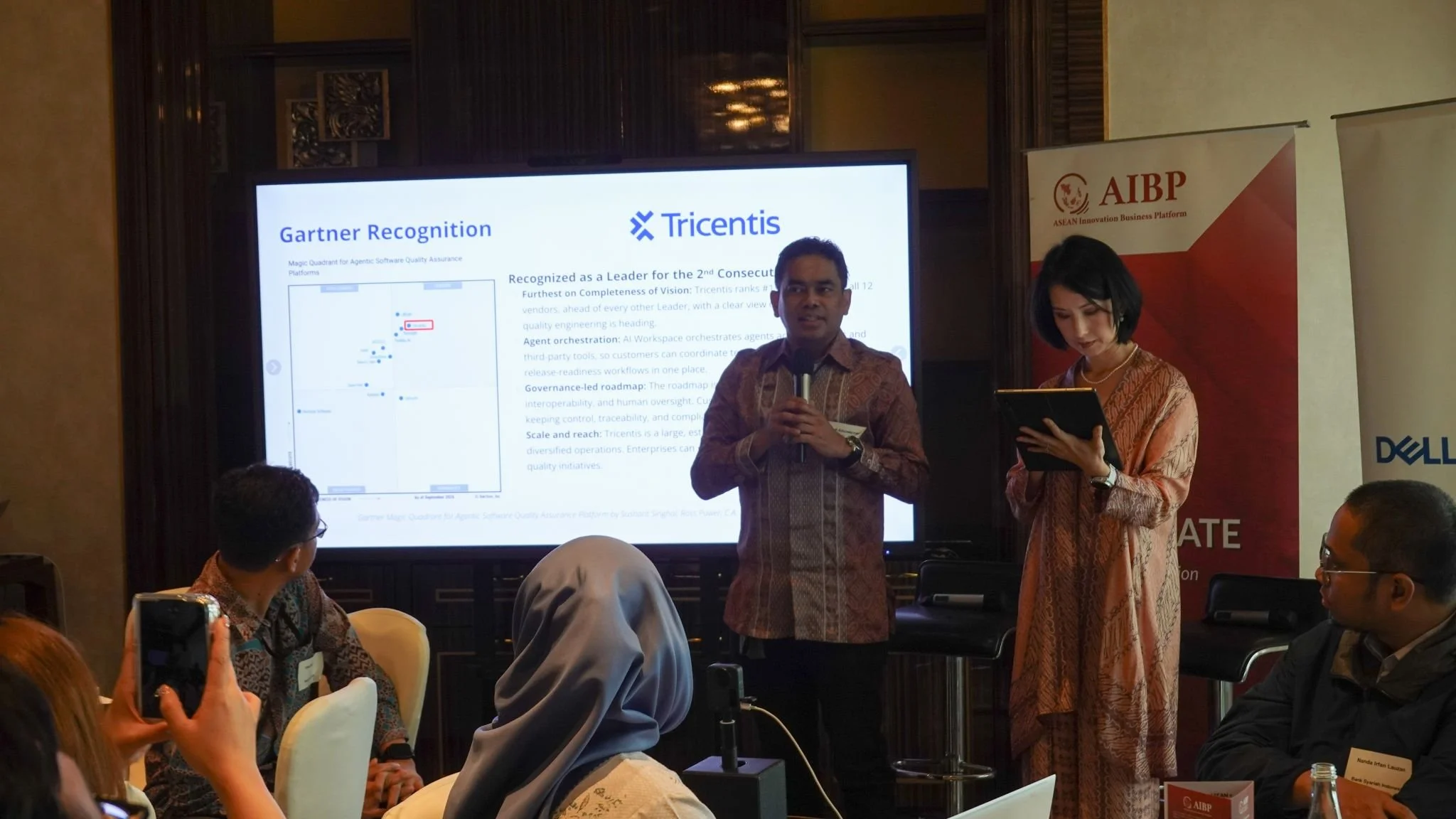
That gap framed an AIBP networking session in Jakarta on 10 November 2026, supported by Tricentis and joined by Dell Technologies. The morning opened with a fireside discussion featuring Irfan Sampe, Deputy Director, Data Innovation and Digitalization Department at Bank Indonesia, followed by leaders from banks and financial institutions sharing how they are approaching the same challenge inside their organisations.
The discussion was less about whether banks should use AI and more about what has to happen before a use case is ready to scale: Can the data be trusted? Is the business value clear? Are the controls appropriate? And can the organisation support what comes next?
Start with the problem and prove the value
Enterprise AI journeys in the room often began long before generative AI became the centre of boardroom conversations, yielding a consistent principle: start with the problem, not the technology.
Participants emphasised that AI use cases need to answer a real organisational need, with business teams, engineers, data scientists and other functions involved in shaping the outcome from the outset. Initiatives are then prioritised according to value, impact and feasibility.
Roundtable discussions echoed this focus on commercial discipline. One participant noted that if a use case does not create clear business value, there is little reason to scale the technology simply because it is available.
Another participant described taking an "atomic" approach, assigning AI specific, measurable tasks, almost like giving work to a highly skilled intern. If the task delivers quick impact, the organisation expands from there; if it does not, investment stops early.
Why AI needs metadata and context
Proving value also depends on whether the AI can be trusted in the first place.
A recurring challenge raised during the morning is that different teams and institutions do not always "speak the same language" when it comes to data, often relying on different definitions, structures and sources for what appears to be the same information. While AI can process large volumes of data, scale alone will not produce useful answers if the underlying information is inconsistent.
In one example shared during the discussion, a model returned an inaccurate answer simply because it did not understand local institutional terminology. The underlying data existed, but the system lacked the contextual metadata needed to interpret it correctly.
As another participant pointed out, metadata for AI needs to be far more complete and granular than what was sufficient for traditional reporting. Establishing those metadata standards alongside clear data ownership forms essential groundwork before AI can interpret enterprise data reliably.
Using governance to enable adoption
Governance is frequently discussed as something that slows innovation down, though participants offered a different perspective.
One participant compared data analytics and governance to attack and defence in football: a strong defence gives the attacking side more confidence to move. The same dynamic applies to enterprise data. Poor data quality forces analysts to spend more time cleaning information, while unclear access rules create delays around what can and cannot be used. Stronger governance can therefore remove friction instead of simply adding approval layers.
To avoid over-engineering controls, participants highlighted the value of a risk-based approach rather than applying identical rules to every AI use case. Factors such as who uses the system, the sensitivity of the data involved and whether AI contributes to decision-making dictate the level of oversight required.
Among commercial banks, participants also raised the challenge of giving employees access to increasingly capable AI tools while protecting sensitive information. Achieving this requires a secure internal environment, clear guardrails, governance and staff training rather than unrestricted access to public tools.
Operational constraints that emerge at scale
Several leaders also pointed to the value of starting incrementally. One banking technology leader described focusing on practical use cases across areas such as software development and front-line processes, while retaining human review and guardrails. Small wins help build organisational confidence.
However, as those initial deployments expand, underlying operational constraints become more visible. Infrastructure leaders raised the cost and lead times associated with the compute required for AI, while others pointed to security, regulation and the challenge of changing established ways of working.
As one participant observed, technology can often be purchased more easily than culture can be changed. Data governance is therefore not only a platform issue—it also requires people to adopt different processes and ways of working.

From Experimentation to Something That Lasts
The Jakarta discussion showed that while building a working model is increasingly straightforward, sustaining it in production depends on the data, controls, infrastructure and organisational habits surrounding it. For Southeast Asian banks moving past experimentation, getting those fundamentals in place is what determines whether an AI initiative delivers lasting business value.
About ASEAN Innovation Business Platform (AIBP)
The ASEAN Innovation Business Platform (AIBP) is an initiative focused on enabling innovation and strategic partnerships across public and private organisations in Southeast Asia. Through curated engagement activities, AIBP supports the growth of regional government agencies, enterprises and solution providers in navigating key themes such as innovation, digital transformation, and sustainability.
Learn more at www.aibp.sg
