
Among 43 Southeast Asian banking groups tracked by AIBP, reported AI oversight rose from six in 2022 to 29 in 2025, yet only 12 reported data and supplier safeguards, and 10 reported formal review and assurance.
Indonesian financial institutions are prioritising AI use cases by weighing cost-to-income improvements and implementation complexity against existing budget and infrastructure limits.
While enterprise data quality requires ongoing improvement, banks must establish granular metadata, clear data ownership and usage rules alongside active development, while avoiding early modifications to core banking systems.
Scaling into agentic AI and interconnected vendor stacks requires setting clear human authorisation boundaries and addressing fourth-party supplier blind spots under OJK expectations.
For banks introducing AI into existing systems, deciding what to modernise first starts with the work they want to improve. The choice of application helps identify which data, infrastructure and controls need attention, and whether the expected benefit justifies the changes required. With limited budgets and existing systems to maintain, which changes should come first?
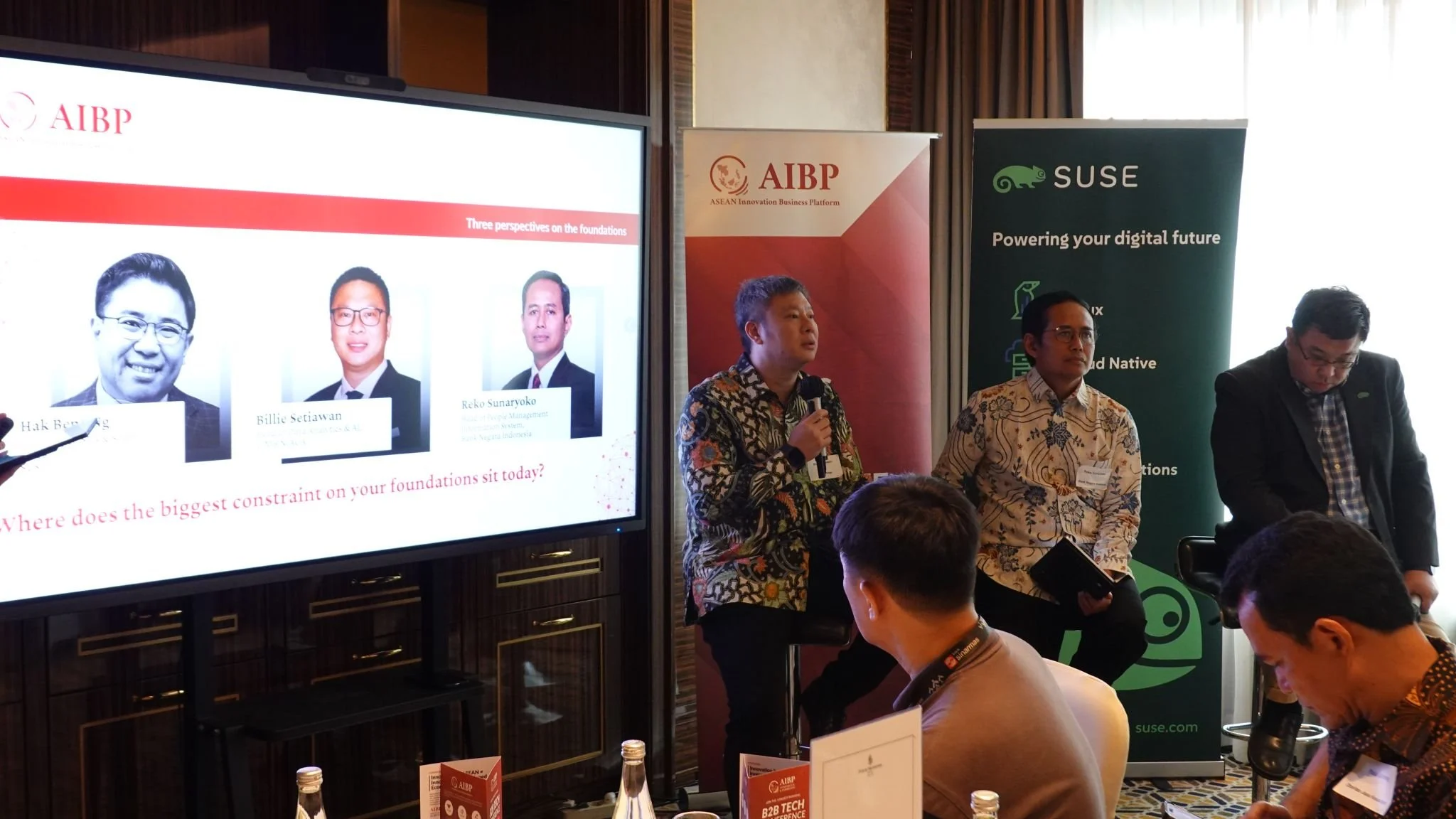
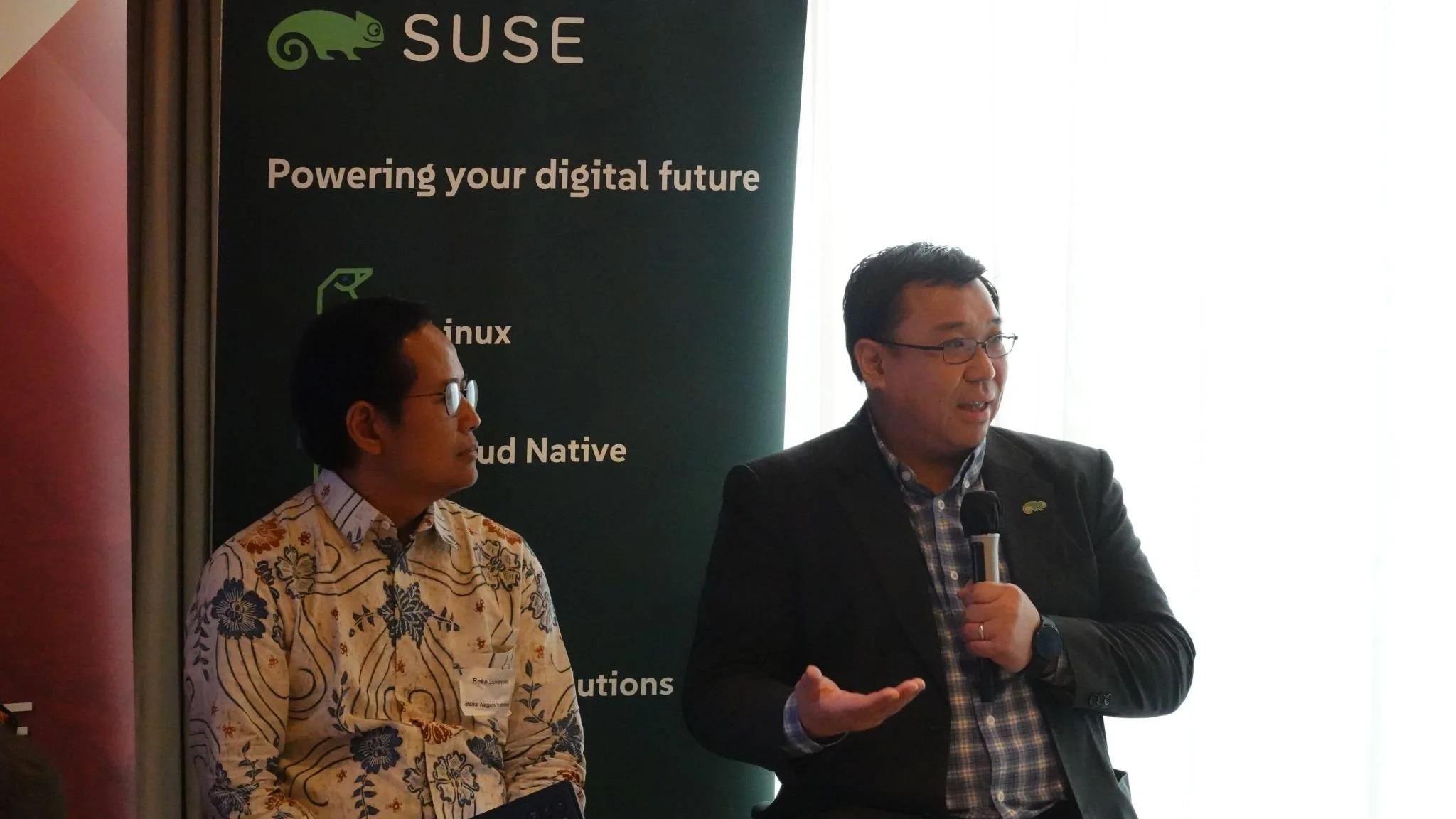
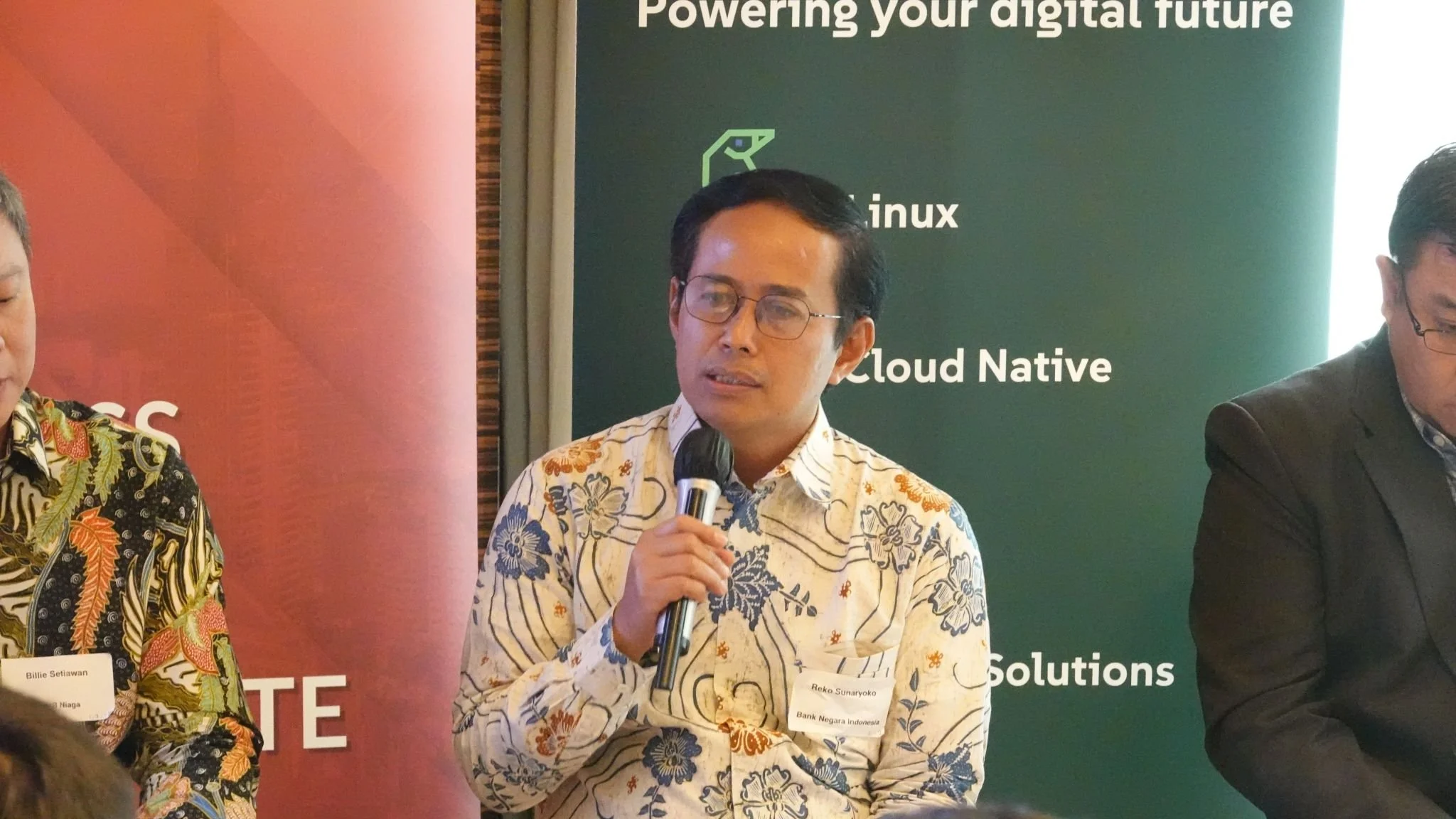
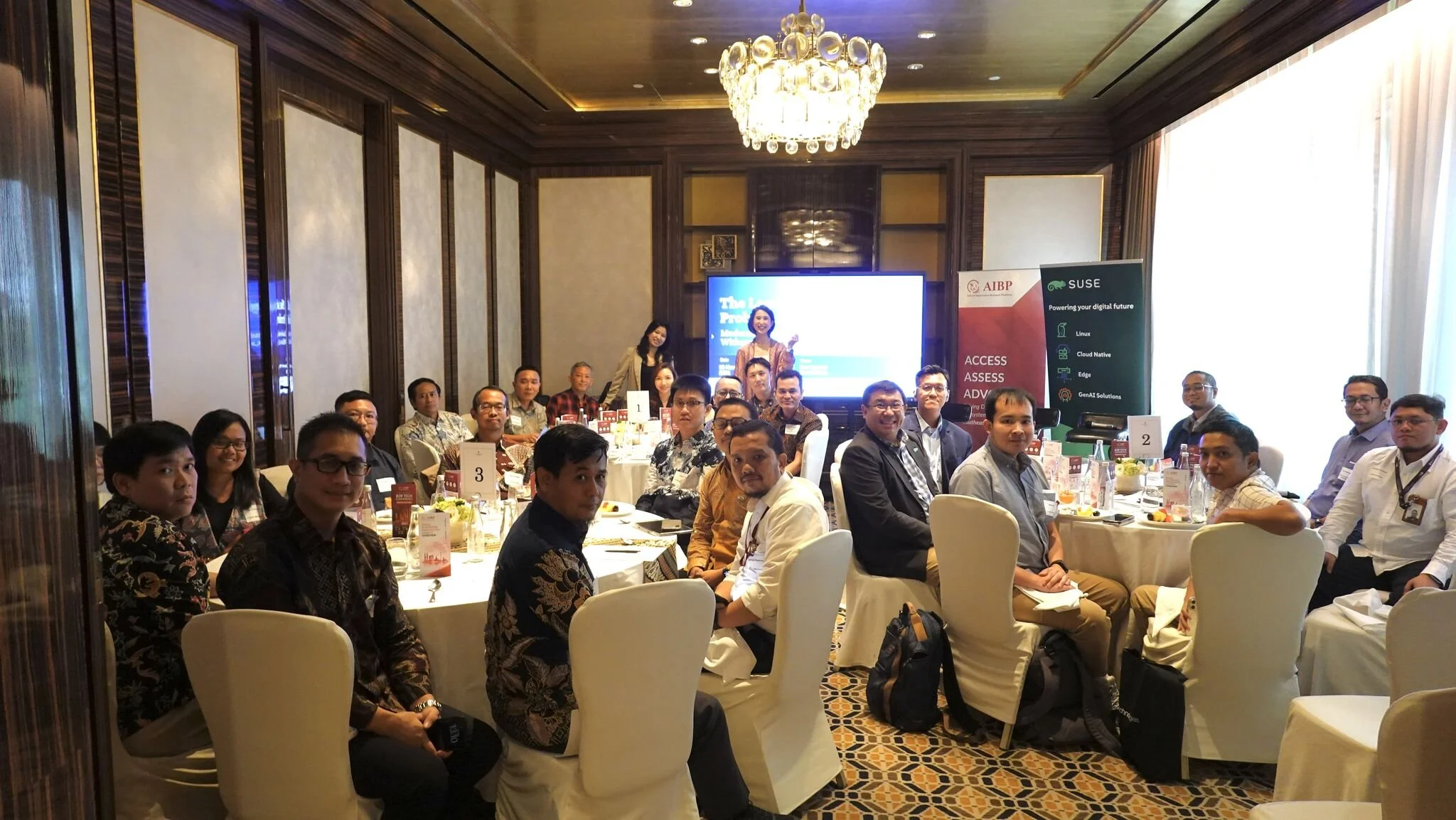
That question framed the second session of AIBP’s 10 November 2026 networking programme in Jakarta, The Legacy Workaround Problem: Modernising Infrastructure Without Adding Risk. The panel brought together Billie Setiawan, Head of Data Analytics & AI at CIMB Niaga, Reko Sunaryoko, Head of Data Management & Governance at Bank Negara Indonesia (BNI), and Hak Beng Ng, SE Manager, SEA and South Korea at SUSE, followed by closed-door roundtable discussions among financial-sector practitioners. They discussed how banks can introduce generative and agentic AI while managing data, regulatory and supplier risks.
AIBP’s review of public disclosures provides context for this discussion. Among 43 selected Southeast Asian banking groups, reported oversight and accountability arrangements rose from 6 in 2022 to 29 in 2025. In 2025, 12 banking groups reported data and supplier safeguards, and 10 reported formal review and assurance. These figures describe public reporting of AI governance arrangements; the session examined the practical choices involved in introducing AI into existing operations.
Prioritise use cases that shift cost-to-income ratios
The discussion approached this choice through the expected business benefit, development cost and implementation complexity of each use case. For infrastructure planning, that means identifying what a useful application requires from the bank’s systems and data before deciding which changes to fund.
The discussion included a shift in how AI investment was assessed: from return on investment towards improvements in the cost-to-income ratio. This perspective also emphasised upgrading employees’ capabilities as agentic workflows developed. The discussion also connected the first deployments to reusable tools for gathering, summarising and comparing documents, reducing the need to return to a specialist AI team for every task. This broadened the investment question: what could the first project make possible for later work?
An example discussed was the use of AI to help relationship managers and contact-centre staff find product information, summarise calls and review service quality. These recurring tasks offered opportunities to reduce manual work and develop tools that could be used elsewhere in the organisation. The systems still had to meet regulatory and audit requirements and respond quickly enough to support staff during customer interactions.
Staff turnover meant repeatedly training new employees and transferring product knowledge. Customer calls also generated recurring work: summaries had to follow a standard format, and quality-assurance teams needed to check the recordings and written records. One example set an expectation that answers should appear within five seconds during customer interactions. That was a performance requirement, rather than a measured result, and it helped explain why a complex deployment could still be worth pursuing. These requirements help explain the infrastructure decisions behind the example: how to prepare the product documents, support fast responses and retain records for review.
Hak Beng Ng of SUSE recommended breaking larger problems into smaller parts rather than attempting to address everything at once. This offered a practical way to think about the scope of each deployment.
Treat granular metadata as an immediate prerequisite

While commercial viability determines which projects receive funding, underlying data architecture dictates whether those systems perform reliably in production. Another participant emphasised that banks must map out data architecture, data flows, and infrastructure, whether on-premise or in the cloud, when determining where AI sits within the enterprise. Not every foundation can be completed before development begins; enterprise-wide data quality requires continuous, long-term improvement rather than a one-off remediation exercise.
Metadata management, however, cannot be deferred. Practitioners observed that metadata built for traditional business intelligence is rarely detailed enough for AI models to interpret enterprise records accurately. Teams must establish granular metadata, including clear definitions, data ownership, and explicit usage rules, alongside active AI development, while ensuring unstructured internal documents are properly formatted and governed for machine readability.
The practical distinction was one of timing. Enterprise-wide data quality was described as continuing work that could not be completed quickly, while richer metadata could be developed alongside an AI use case. This included fuller descriptions and guidance on what data should and should not be used for. Teams could therefore improve the information needed for a particular application while continuing the wider data-quality work.
Avoid early core-system modifications when sequencing deployments
Financial governance further shapes which architectural changes come first. In one participating bank, proposed AI initiatives must pass formal feasibility studies comparing expected benefits against implementation costs before securing management approval, alongside an evaluation of whether the deployment addresses regulatory or audit requirements.
Participants advised weighing technical complexity when selecting initial use cases, including whether a project requires major changes to core banking systems. Workflows that avoid those changes may offer a way to deliver value sooner.
Define authorisation boundaries before scaling agentic workflows

As institutions consider agentic AI that can take actions as well as retrieve information, participants emphasised the need to define authorisation boundaries and human escalation rules before deployment. These controls need to reflect the institution’s processes and responsibilities.
The roundtable also brought the cost of control into the investment decision. Participants asked how much decision-making authority an agent should receive, how it would acquire the context needed to act appropriately, and how much the organisation was willing to spend controlling it. Those questions make the assessment broader than the expected productivity gain alone.
Participants stressed that efficiency gains must be considered alongside customer data protection, cyber resilience and consumer trust. Institutions need to distinguish actions an agent may take independently from those requiring human approval.
Extend risk oversight to fourth-party supply chains
Modernising onto interconnected AI stacks also expands an institution's external attack surface. Roundtable participants pointed out that while banks can enforce privacy agreements and security audits on their direct technology vendors, they have far less visibility into the sub-processors and downstream providers sitting further down a supplier's technology chain.
AIBP’s study of public disclosures from 43 selected Southeast Asian banking groups found that the number reporting established controls for operating AI systems increased from 3 in 2022 to 20 in 2025. 12 groups also reported established safeguards for AI-related data and suppliers in 2025. The findings show how banks’ reporting of AI safeguards has developed; assessing how well those safeguards work, including oversight of suppliers’ own providers, requires further evidence.
Without stronger visibility across multi-tier vendor chains, banks risk introducing third- and fourth-party vulnerabilities even when their own internal guardrails are in place.
What to prioritise in Indonesian financial institutions
The discussion suggested a practical sequence for Indonesian financial institutions: choose use cases with a clear business benefit, strengthen metadata alongside development, and define the limits on agents and suppliers before expanding their access.
The order will depend on each institution’s systems and risks. These choices still require assessment against applicable OJK requirements and the institution’s own controls.
About ASEAN Innovation Business Platform (AIBP)
The ASEAN Innovation Business Platform (AIBP) is an initiative focused on enabling innovation and strategic partnerships across public and private organisations in Southeast Asia. Through curated engagement activities, AIBP supports the growth of regional government agencies, enterprises and solution providers in navigating key themes such as innovation, digital transformation, and sustainability.
Learn more at www.aibp.sg
