
Governing AI in the Philippine Enterprise: Balancing Speed, Security, and Trust
Philippine enterprises are racing to adopt artificial intelligence. They are not yet racing to govern it.
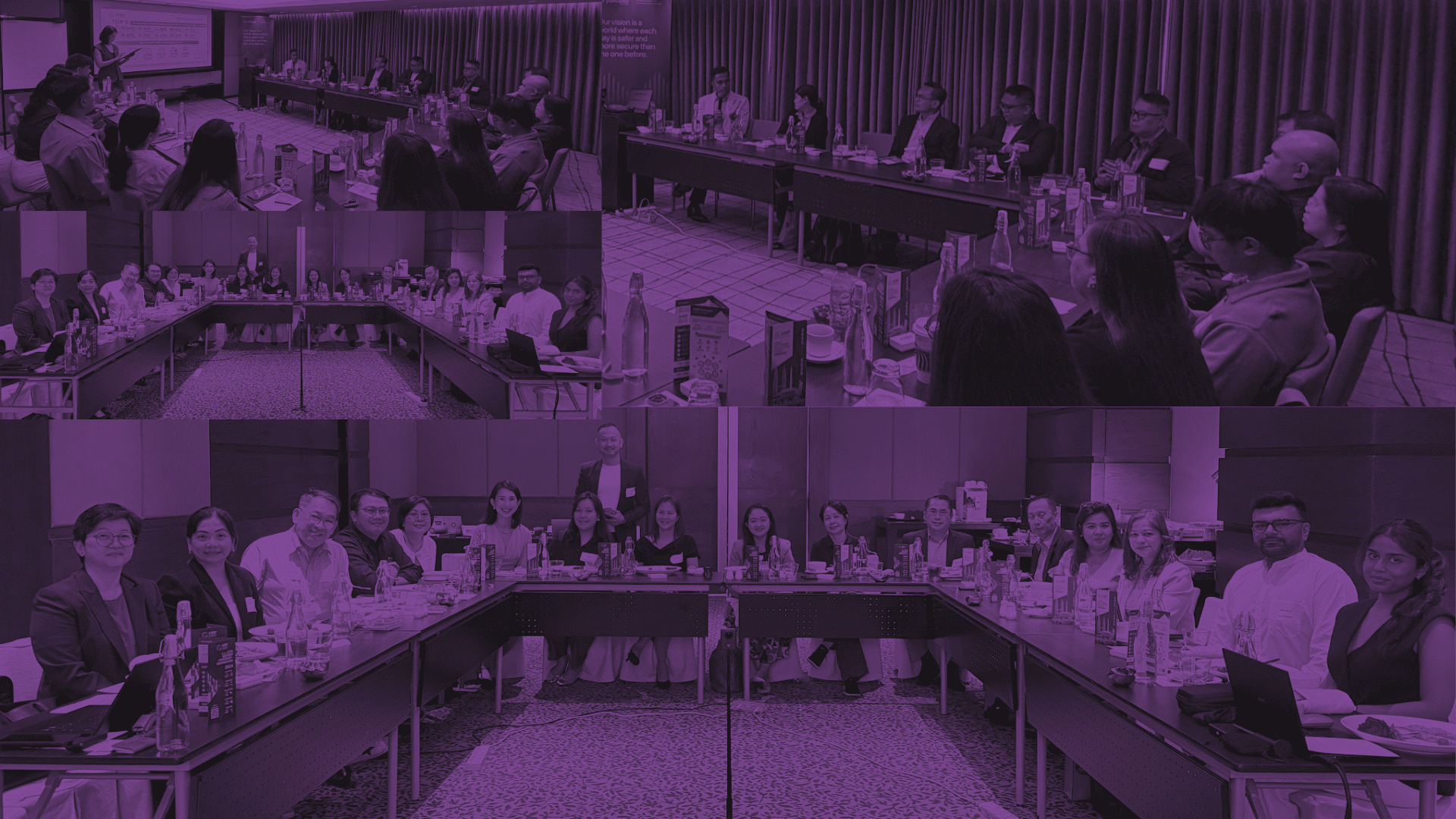
Between November 2025 and April 2026, AIBP convened two closed-door executive roundtables and one podcast interview with senior business and technology leaders from the Philippines' largest conglomerates. Their diagnosis was consistent: the greatest threat to enterprise AI is not the technology itself. It is the absence of the structures, behaviours, and culture needed to control it.
The data backs the diagnosis up. 79.3% of Philippine enterprises intend to invest in AI within the next two to four years — one of the most AI-committed markets in the region. Yet 81.5% of leaders believe significant AI investment is necessary to stay competitive, while only 6.4% are pursuing the aggressive transformation that conviction demands. Of existing deployments, 65% remain stalled at proof-of-concept, held back not by lack of ambition but by unresolved security and governance concerns.
The stakes are rising on two fronts at once. Internally, shadow AI — unsanctioned tool use across every function and seniority level — is already embedded in workflows, largely invisible to the teams meant to manage it. Externally, agentic AI systems that plan, decide, and act autonomously are moving fast from experimentation to production. The World Economic Forum projects that by 2028, 33% of enterprise software will incorporate agentic AI, with at least 15% of daily decisions made autonomously. Palo Alto Networks' Unit 42 found that in the fastest attacks, adversaries moved from initial access to data exfiltration in just 72 minutes — four times faster than the year before. Ungoverned AI is not a future risk. It is a present one.
The problem isn't AI. It's uncontrolled AI.
Shadow AI is a behaviour problem technology has enabled. Employees across finance, operations, HR, and strategy are adopting AI tools for rational reasons — they're faster and increasingly free to access. The issue is that they're doing so without visibility, policy guardrails, or any mechanism for the organisation to know what data is being processed, where, and by whom.
There's a second, less visible layer: AI embedded in the SaaS platforms and vendor stacks enterprises didn't choose and can't fully see. Under NPC Advisory 2024-04, Philippine enterprises remain accountable for AI outcomes even when processing is outsourced to third-party providers — with penalties of up to PHP 5 million per violation. Most technology contracts predate the generative AI era and don't address what data vendors' AI trains on or how it's governed. That's not a future risk. It's an active one.
The response: fight AI with AI, and secure it by design.
Traditional governance — policy enforcement, access controls, annual training — can't keep pace with AI adoption. The framework that emerged from AIBP's roundtables operates in three sequential stages:
Discover: continuous, real-time visibility into which AI tools are in use, by whom, and on what data — including AI embedded in third-party platforms.
Govern: tiered policies matched to data sensitivity, enforced through a multi-disciplinary AI council (IT, legal, compliance, business) with real decision rights.
Secure: active runtime protection — data security posture management, AI-driven threat detection, and prompt-injection defence — integrated into the broader security operations function.
The results are measurable. Aboitiz Equity Ventures consolidated a fragmented, 35-unit security stack onto a single platform and cut tool sprawl by 66%, tickets by 80%, and time/cost by 40%. The Department of Social Welfare and Development, after discovering a threat actor had evaded detection for one to two years, partnered with Palo Alto Networks and Unit 42 to stop 100% of Trigona ransomware attacks and block new threats within minutes.
What's coming: agentic AI
Current governance frameworks focus on which tools employees can use. Agentic AI requires governing something different — the permissions and decision boundaries granted to autonomous systems. As these systems take sequences of actions inside CRM, finance, and email platforms without human approval at each step, accountability gets harder to pin down. Philippine enterprises — especially in regulated sectors — need explicit accountability maps before deployment, not after the first incident.
The IT-BPM sector faces a structural inflection here. It's a USD 38 billion industry, 8.2% of GDP, employing 1.8 million Filipinos — and the routine, rule-based tasks that make up most of that employment are exactly what agentic AI executes best. The IMF estimates roughly a third of Philippine jobs are highly exposed to AI disruption. This is an enterprise governance question, and a national economic one.
The safeguard: culture, not just controls
Even the most sophisticated governance architecture depends on the people operating inside it. Technology can make ungoverned AI visible — it can't make employees care about what they see, or build the psychological safety needed to flag concerns before they become incidents.
Five priorities for Philippine enterprise leaders
Inventory before you legislate. Build real-time discovery of every AI tool in use — employee-adopted and vendor-embedded — before writing another policy.
Audit vendor AI as a contract priority. Liability for vendor AI misuse sits with the enterprise that signed the contract. Renegotiate now.
Build for agentic AI now. Specify accountability maps, minimal permissions, and continuous auditability before deployment — not after an incident.
Make AI council decisions enforceable. Tie governance decisions to actual access controls and incident response playbooks, or they're just policy theatre.
Put governance maturity on the board agenda. It's now a question regulators, global clients, and rating agencies will ask. Define the metric, set the cadence, report it.
The bottom line
81.5% of Philippine enterprise leaders already know AI investment is necessary to stay competitive. The organisations that close the governance gap won't do it by slowing down — they'll do it by building the technical, structural, and cultural infrastructure that makes speed sustainable. The enterprises that get there before regulation forces the issue won't just be compliant. They'll be trusted — and in a region racing toward agentic AI, institutional trust is the most durable competitive asset an enterprise can build.
This article is a condensed version of AIBP's latest report, drawing on AIBP's 2025 Enterprise Innovation Survey (900 respondents across Indonesia, Malaysia, the Philippines, and Thailand) and two closed-door executive roundtables plus one podcast interview conducted between November 2025 and April 2026. You may request and view the full report here.